The history of La Serenissima is a story best told by the lives of two of its' most well known citizens; Marco Polo, the merchant and explorer of the 13th century; and Giacomo Casanova, the seducer and lover of 18th century.
One used his mastery of the sea to explore the world and trade in the most precious goods, whilst the other worshipped all that is beautiful and romantic.
Together, these two forces of industry and art have, over many centuries, created a truly magical city.
Rialto was the first harbour of Venice and the origin of the city. The barrels, boxes, spices, wine and oil perfumes which were unloaded on the bank of the Grand Canal were housed in the warehouses called fondaci.
From 15th to 18th century Venice enjoyed unprecedented wealth and influence under the Repubblica Serenissima di Venezia, a system of government close to modern democracy, but ruled by the Doge.
The 18th century was a time of great decadence in Venice, brought to an abrupt end in 1797 when Napoleon Bonaparte invaded and Venice became part of the Austrian empire. It was many years later in 1860 that the army of Giuseppe Garibaldi made it possible for Italy to become a nation, and Venice joined it in 1866.
During its long history the biggest constraint to the growth of Venice as a city was that of maintaining a supply of fresh water. The solution was to channel rainwater from the rooftops into subterranean Wells, part filled with sand, where the filtered water was then pumped up into the city - you'll see them in every square.
The shallow waters of Venice gave rise to the creation of the Gondola, the most instantly recognisable symbol of Venice. A flat-bottomed boat, it is inclined to the right and works without a keel. The Gondoliers, famous not only for their incredible skill at controlling the gondola, but also for their singing voices, serenading lovers throughout the ages as they gently travel the canals of Venice.
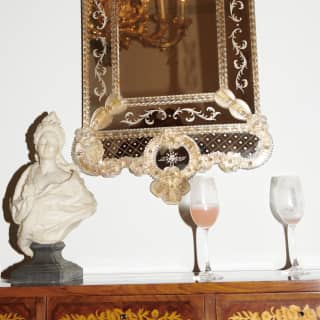
Venice has always been a centre for architecture, the fine arts and the world's most exquisite crafts. Most well known are the Glass Factories centred on the islands of Burano and Murano, producing breathtakingly beautifully lights, tableware and objets d'art.